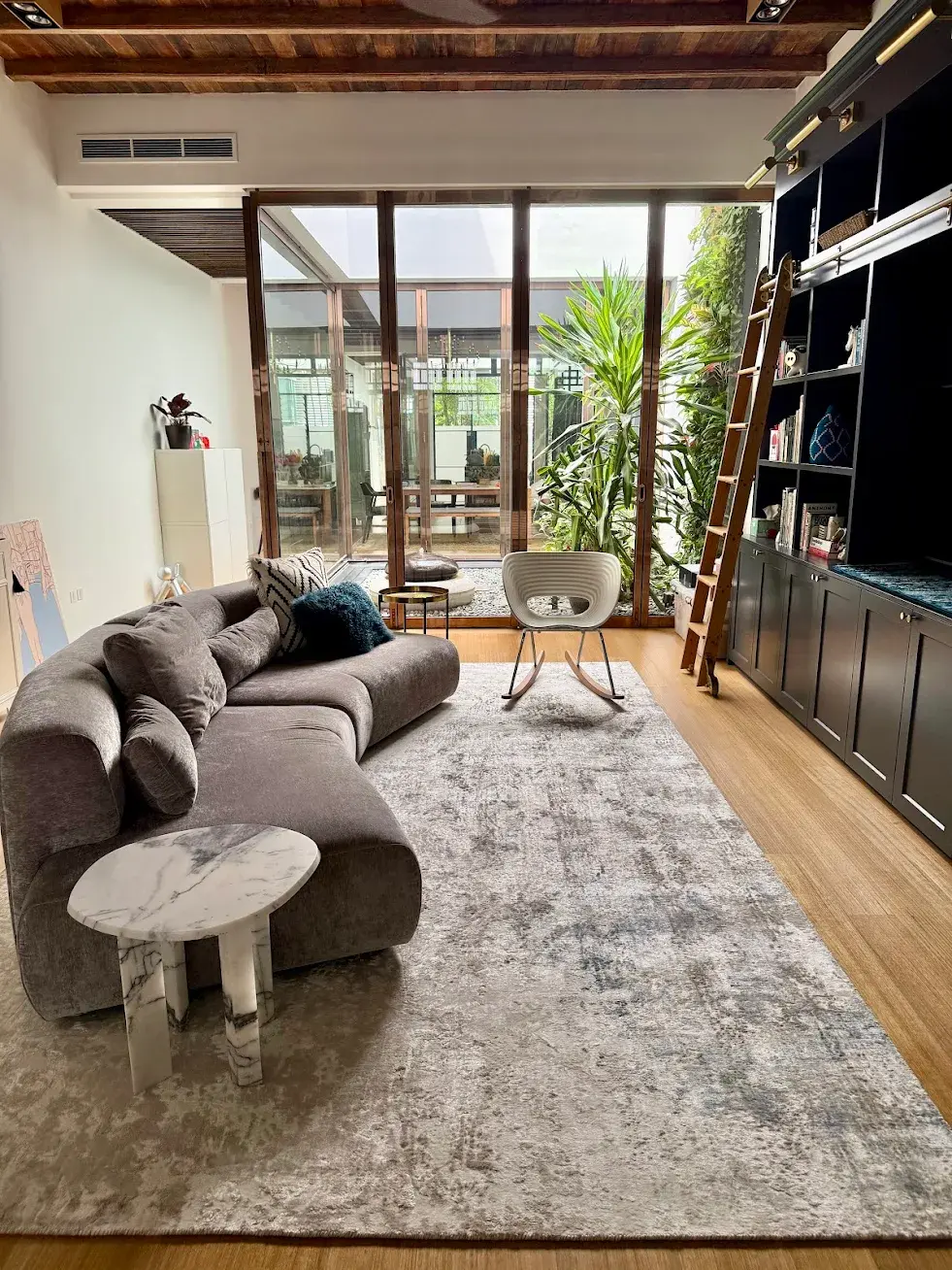
Rugs & Carpets Material Guide

So you compiled your moodboard, made a shopping list for your home restyling/ renovation, and decided to buy a rug. The next question to tackle: how do I choose a rug?
In this guide, you will have all the information you need to decide on what rug material to choose for your modern home. What you are about to read is completely based on our years of experience working with rug artisans, as well as interactions with our clients - interior designers and homeowners alike at Living DNA. We aim not to create a generic online article (if you're reading this, chances are those articles only added to the confusion) but a very Singapore-specific guide, suited to the modern aesthetic we aspire to in our HDB, condo or landed home, nestled in our tropical humid urban jungle. Online references are for fact check purposes.
For ease of reading, this guide focuses specifically on materials used in the modern rugs available at Living DNA, including both our ready-made collections and custom-made pieces.

TENCEL™
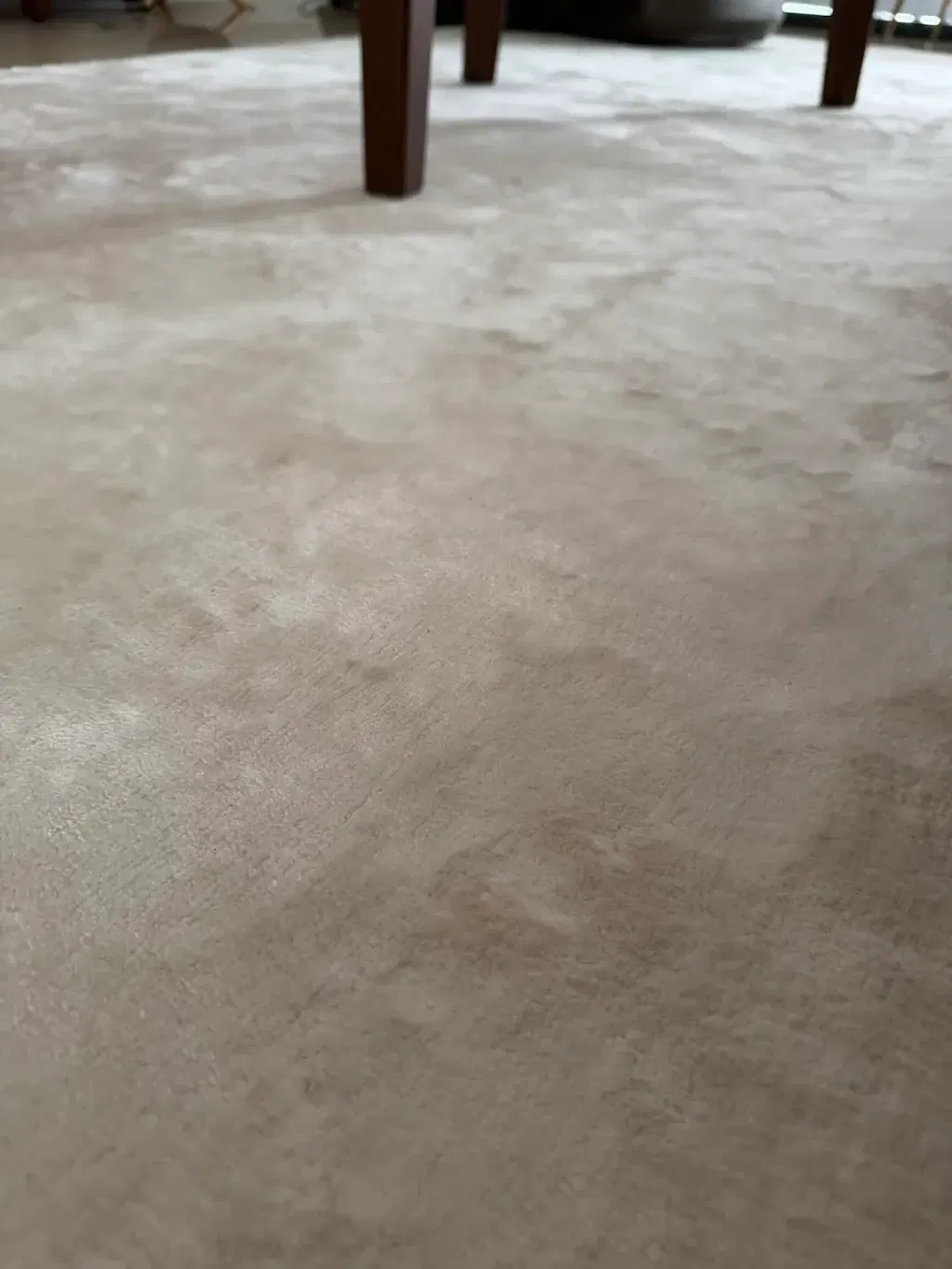
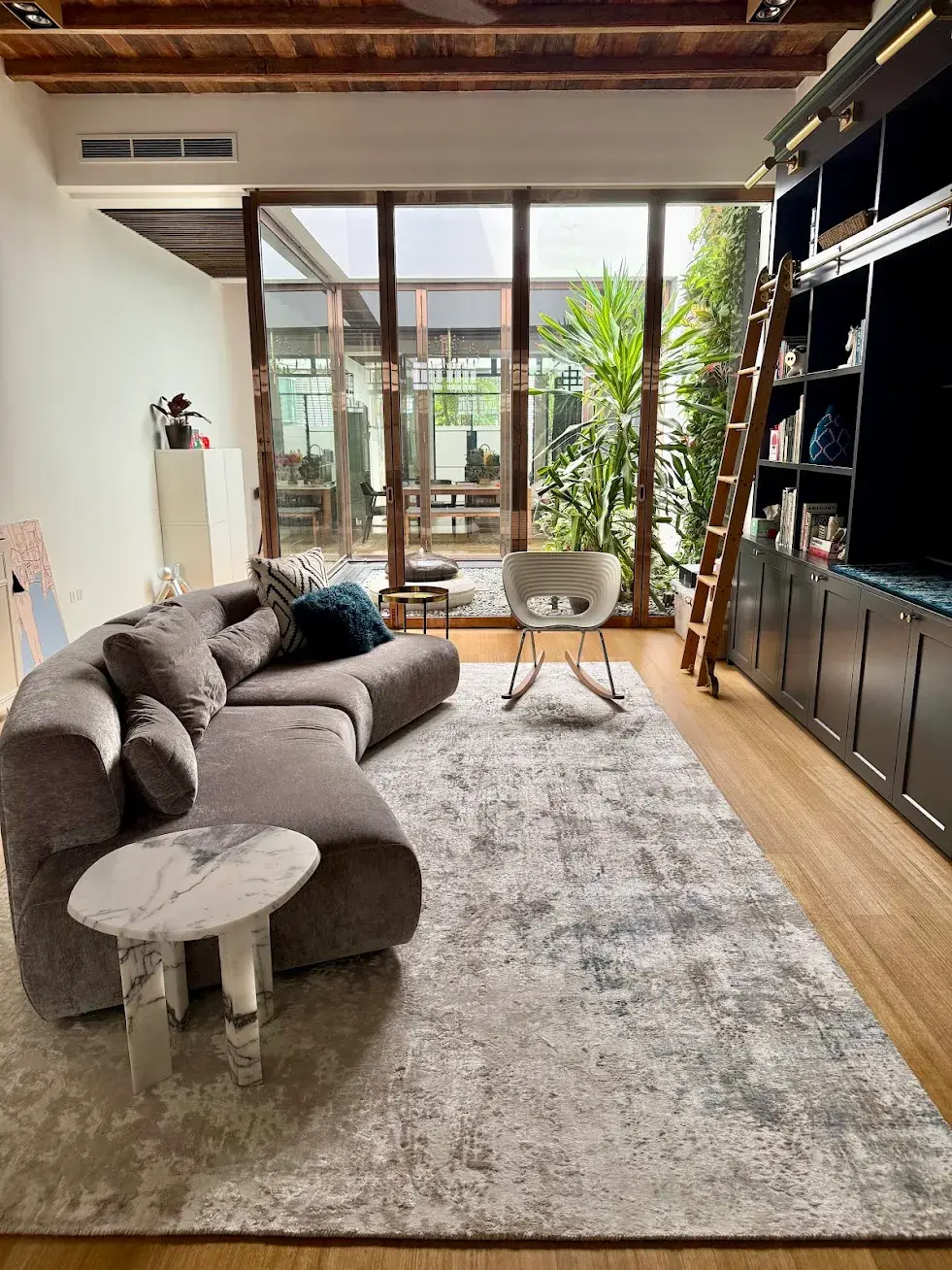
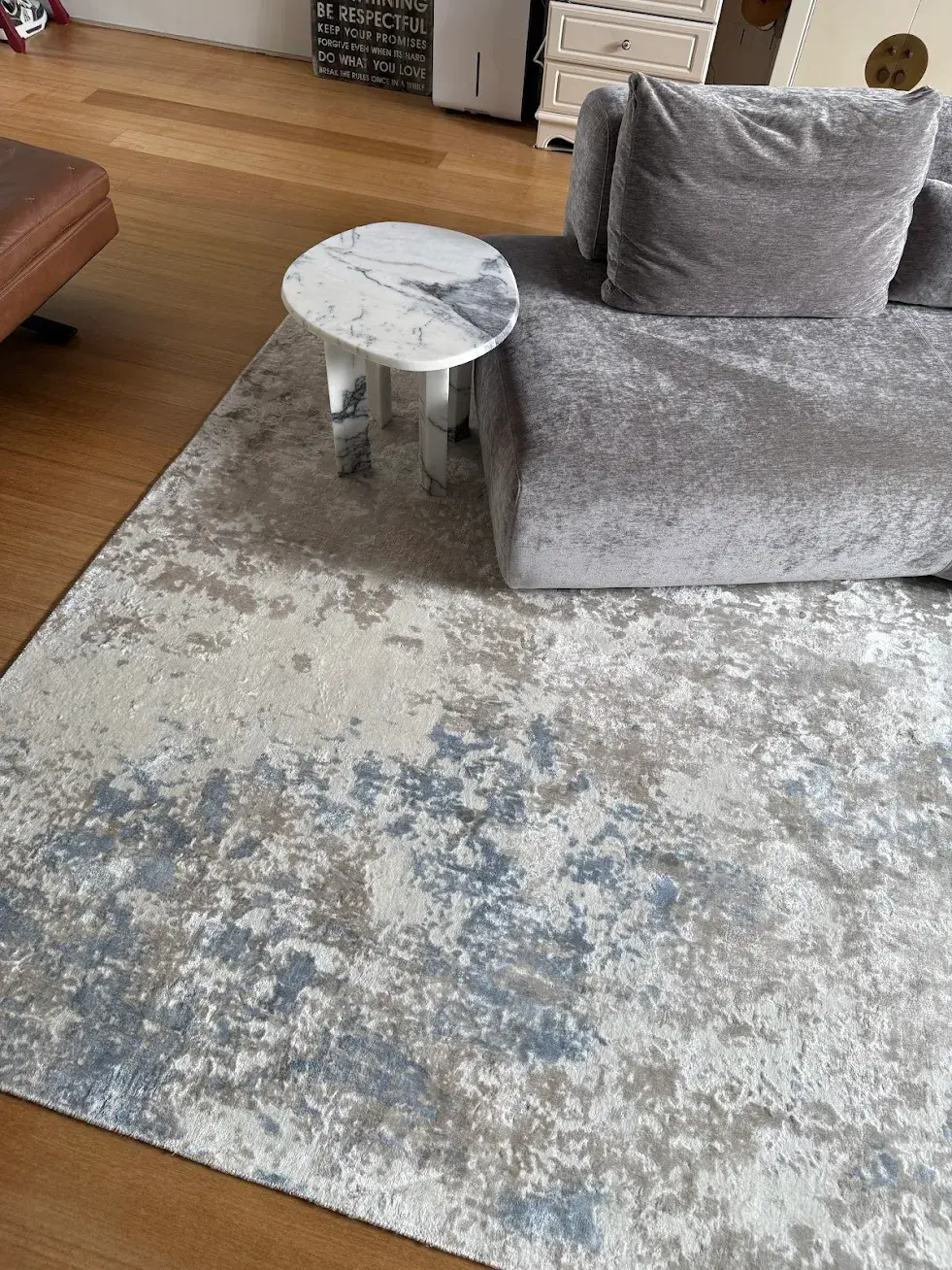
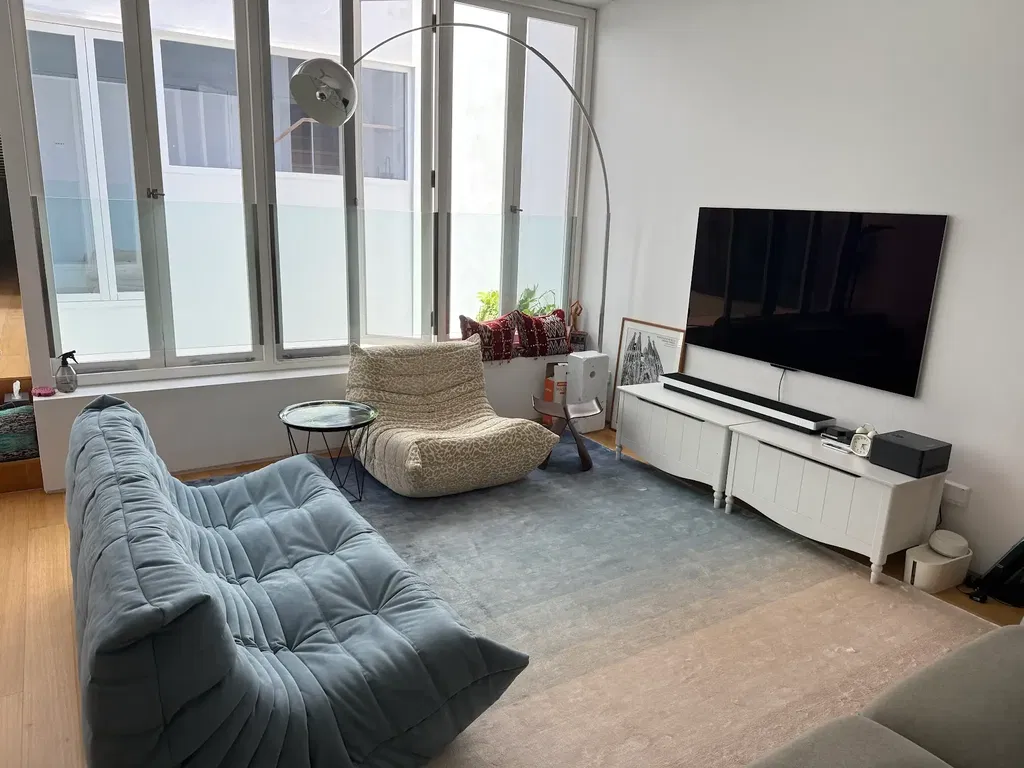
We often hear about TENCEL™ in bedsheets, duvet covers and clothing, loved for its smooth feel, breathability and moisture-managing qualities. But did you know that our bestsellng rugs are also made of TENCEL™? Similar to why everyone loves TENCEL™, it has a smooth luxurious texture and lustre of natural silk, even in a low pile (read, thin) rug. Choose a medium to high pile (thick) rug to maximise its softness - your feet will thank you. They last for a good amount of years. Considering the quality, TENCEL™ rugs are relatively affordable, highly recommended for the living room and bedrooms.
Visually stunning.
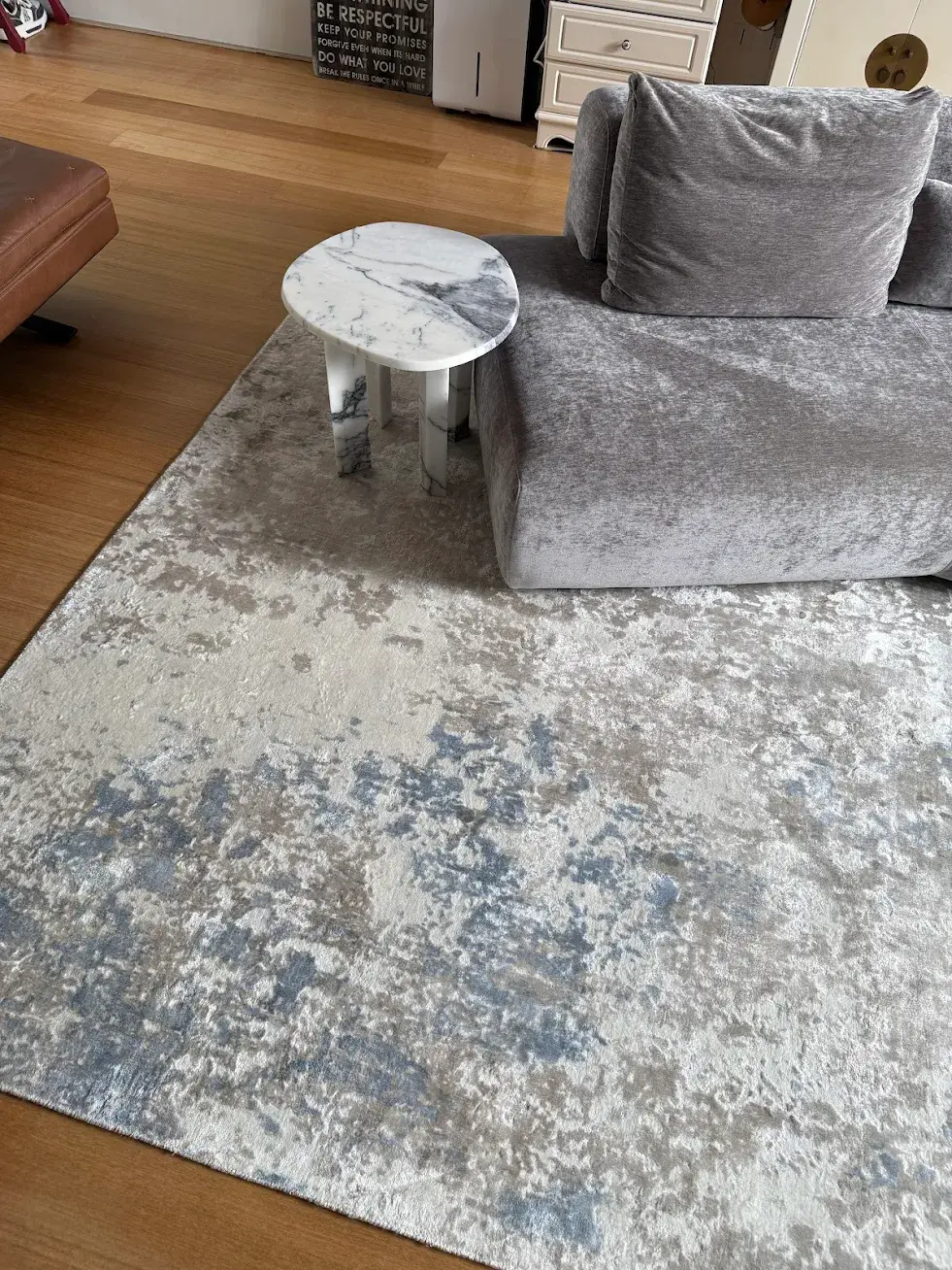
A TENCEL™ rug has a similar visual effect to velvet. One side of the fibre reflects more light and the other side is more matte, so the rug looks lighter when viewed in one angle and darker in another. This creates a stunning, two-toned effect in the simplest solid coloured rug. In patterned or multi-coloured rugs, the sheen of TENCEL™ adds another dimension of interest.

Low maintenance.
TENCEL™ is easy to maintain. Over the years in our showroom, we notice that dust settles less in TENCEL™ rugs. When it does, you can vacuum it out quickly because the shiny surface offers some resistance from dust compared to matte wool. Liquid spills can be pat dry with a paper towel.
Weekly care.
TENCEL™ sheds much less than wool, but take note that all high pile rugs will definitely shed. As is TENCEL™ is gentle to your skin, so should you be gentle when caring for it. Vacuum clean at a low setting, no more than once a week. The most common mistake people make is to vacuum clean their TENCEL™ rug aggressively, daily, in an attempt to remove the shedding. This actually aggravates the shedding as the rug fibres are pulled.

How sustainable is TENCEL™?
TENCEL™ is a plant-derived fibre made from sustainably sourced wood pulp, commonly eucalyptus, and is known for its soft, silky texture and beautiful natural sheen.
Its smooth, moisture-managing fibres also make TENCEL™ a considered choice for rugs in Singapore’s warm and humid climate, while lending a luxurious softness and luminous finish to the surface.
Sustainability also extends beyond the material itself. Investing in quality workmanship, such as our handloom pieces, means choosing a rug designed to be enjoyed for years rather than frequently replaced. Caring for and keeping the pieces we love for longer is an important part of making more mindful choices.

In a nutshell: Choose TENCEL™ if you’re looking for a rug that is luxuriously soft & hypoallergenic with a beautiful silk-like sheen — an especially lovely choice for Singapore’s warm and humid homes.

NEW ZEALAND WOOL
Cold feet?
Wool is the most traditional material for rugs. No surprises there, considering that for most of human civilization, rugs and carpets were created to give warmth to floors or bare ground especially during winter season, and this naturally insulating material from sheep's fleece does the job best. In tropical Singapore though, you'd rarely need this level of insulation against cold. At most you would want to not feel the coldness of your tile while you step out of your bed or hang out on the sofa, and any fabric works well enough for this.

Custom NZ Wool Flux Sapphire Blue Rug
Best for high traffic public areas.
If longevity is your concern, then yes, wool is hands-down the strongest rug material there is. Carrying a natural springiness, wool recovers quickly from friction, footsteps and impact of furniture. It has a natural resilience to moisture - we're talking about spills - and is therefore less prone to staining. Admittedly, it does not have the smoothest feel underfoot. At Living DNA, we receive most wool rug orders for high traffic areas or public places where people wear shoes such as hotel lobbies, retail concept stores, offices or lounge spaces.
Regular vs New Zealand wool.
There are two grades of wool typically used for rugmaking: regular wool blend and New Zealand wool. Regular wool blend combines fleece from several sheep breeds and from different countries such as India, Nepal and China. NZ wool is, as the name suggests, from sheep breeds in New Zealand. Think of it the way you do your single origin coffee. It costs more but if you compare side-by-side, it is consistently softer than regular wool. Known to be the whitest, cleanest wool in the world, we find that NZ wool absorbs dyes better so we use it when we want to achieve bright, vibrant, uniformly coloured rugs.

Wool sheds more.
Note that NZ wool rugs shed more than other fibres. It requires more vacuum cleaning than usual. If you have lived in temperate climates and grown up with NZ wool rugs, you would probably be comfortable with the feel of the material and the maintenance that goes with it.
How ethical is NZ wool?
Sustainability-wise, wool rugs practically last a lifetime. At the end of its life, the material is renewable and biodegradable. Shearing sheep for its wool can be achieved in humane ways; sadly we learned that in some countries this is not always done. Fortunately New Zealand is the world leader in ethical raising and shearing of sheep, thanks to the country's Animal Welfare Act.

In a nutshell: Choose wool if you need a heavy duty rug and don't mind the slightly rough feel. If your budget allows, upgrade to New Zealand wool.

RECYCLED PET
Conscious durability.
PET stands for polyethylene terephtalate, the material used for plastic water bottles. Recycled PET simply means fibre produced from the recycling of used plastic water bottles. You can find this wildly popular material at every major apparel brand aiming to adopt more sustainable practices, from dresses to sneakers to bags to jackets. And it's easy to understand why. It feels pretty good on the skin; you won't guess you're wearing plastic.
A rug that is soft yet durable.
If you're looking at a rug that's soft yet practical, recycled PET might be your best bet. In the recent years, we have develped recycled PET rugs such that its practicality does not compromise on its softness. As compared to TENCEL™, recycled PET is much easier to clean off accidents and spills, because it takes a much more longer time for the fibres to absorb as it is technically plastic.
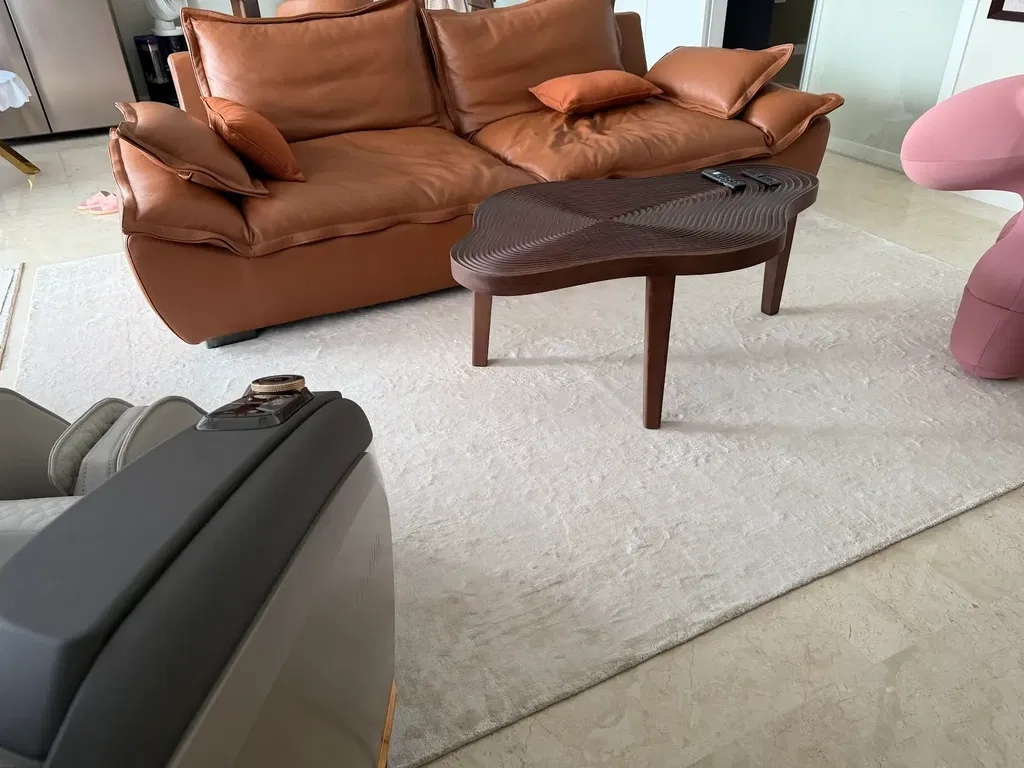
 Ready-stock Recycled PET Lithe Cream Rug
Taking over the home makeover.
Initially curated for outdoors, these cottony soft rugs are so practical that more and more people opt for recycled PET to style up their living room and bedroom. You can choose solid colours, patterned pieces or textural weaves. Recycled PET rugs usually come in a flatweave, not high pile, form. This makes it an awesome dining area rug, easy enough to wipe and spot wash.

In a nutshell: Choose recycled PET if you prefer something that still offers durability and easy maintenance but want a softer, more textile-like feel, recycled PET may be a better fit.

A close-up of Cabana Polypropylene Cable Knit Indoor/Outdoor Rug
POLYPROPYLENE
Poly-what?
Polypropylene is a durable synthetic fibre designed to stand up well to everyday living. Naturally water and stain-resistant, it does not readily absorb moisture, making spills easier to clean and helping the rug dry quickly after washing.

Ideal for outdoors.
Lightweight yet hard-wearing, polypropylene rugs are particularly well suited to high-traffic areas, busy households, homes with children or pets, and spaces where easy maintenance is a priority. Their resistance to moisture also makes them a practical choice for Singapore’s humid climate, as well as covered outdoor and indoor-outdoor spaces.

Custom Basket Weave Tricolor Indoor/Outdoor Washable Rug
100% washable.
Unlike more delicate fibres such as wool, TENCEL™, and recycled PET, polypropylene can generally handle more frequent cleaning and everyday wear without requiring the same level of care. Many polypropylene rugs can even be fully washed, making them an approachable option for areas such as dining rooms, playrooms and entryways.
It's also a great alternative if you love the natural, textural look of jute or sisal, but need something far easier to live with. Polypropylene can be woven to recreate that organic, earthy appearance while offering something natural fibres typically can't: a rug that is 100% washable. You get the relaxed, natural aesthetic without having to be quite so careful around water, spills or outdoor conditions.

In a nutshell: Choose polypropylene if you want a truly fuss-free rug that can be fully washed, dries quickly and handles water with ease — perfect for outdoor spaces, busy households and anywhere spills are part of everyday life.
 A close-up of ready stock Hale Jute Natural Rug
JUTE & SISAL
Au naturel.
Jute rugs come in a wide range of beautiful weaving textures, giving the home a down to earth, resort vibe. If you are going for a coastal or bohemian chic interior, at least one jute rug at your home is a must. In Scandi design, this material is key to achieving "hygge", a general level of well-being. The Japanese use natural fibre rugs and enjoy its aging, a "wabi-sabi" element in the home. Jute usually comes in a natural brown colour. It can be also dyed and the resulting colour is wonderfully earthy and organic, unlike wool or viscose, because of its brown, varying undertone. Did we mention they're also surprisingly cheap?
Not the softest.
Jute is one of the strongest plant fibres. You would feel the coarse texture underfoot, so it may not be your conventional idea of a rug i.e. soft and plush. The good news is most people get used to it, and it in fact becomes softer over time. In some rugs, we interweave jute with softer materials such as cotton or wool to improve its overall softness and give it a design twist.

Ready stock Hale Jute Natural Rug
Tight vs chunky.
The utility of jute rugs varies with its weaving style. Opt for a tighter weaving pattern for dining table rugs, so that food crumbs do not get lodged, and you can vacuum clean or wipe them away easily. For the living room, bedroom or special corners, you can opt for chunkier or braided weaves which look more interesting and unique. Examine the jute rug up close to appreciate its weave.
The most sustainable rugs.
Jute is perhaps the most sustainable common rug material. The jute plant grows fairly easily without the need for pesticides or hugely consuming irrigation systems, only natural rainfall. It reaches maturity quickly (4-6 months) and absorbs carbon dioxide and releases oxygen faster than trees. Preparing the material for rugs require minimal processing: fibres are stripped from its wood stalk, washed in water, and hung to dry under the sun. Except for dyed designs, there is no chemical treatment. The whole process is done by hand, in the same locality where the rugs are woven, resulting in a lower carbon footprint. Your beautiful, strong jute rug can last you a long time. At the end of its useful life, jute is fully biodegradable.

In a nutshell: Choose jute for an earthy chic look. Tight weaves are more practical for the dining area.
So, which rug material is right for you?
There really is no single “best” rug material, only the one that works best for your space, lifestyle and the way you want your home to feel.
If softness and a luxurious finish are at the top of your list, TENCEL™ is hard to beat. For strength and longevity, look to NZ wool. If you want something soft yet practical, recycled PET offers a great balance. For maximum washability and fuss-free living, especially outdoors, polypropylene is your friend. And if natural texture and sustainability matter most, jute and sisal bring an organic warmth that is difficult to replicate.
The material is only one part of choosing the right rug. Size, construction, pile height, weave and where it sits in your home all make a difference too.
Still unsure? At Living DNA, we work with rugs every day. From helping you choose from our ready-made collections to customising the material, size, colour and design for your space. Speak to us at 85113584 and we’ll help you find the rug that makes sense for the way you live.